
Supporting a Veteran who’s suicidal

Here’s an example:

A Veteran friend sometimes calls you late at night when she’s been drinking. She talks about suicide, but by the end of the call she feels better. The next day she usually says it was just the booze and she’s fine.
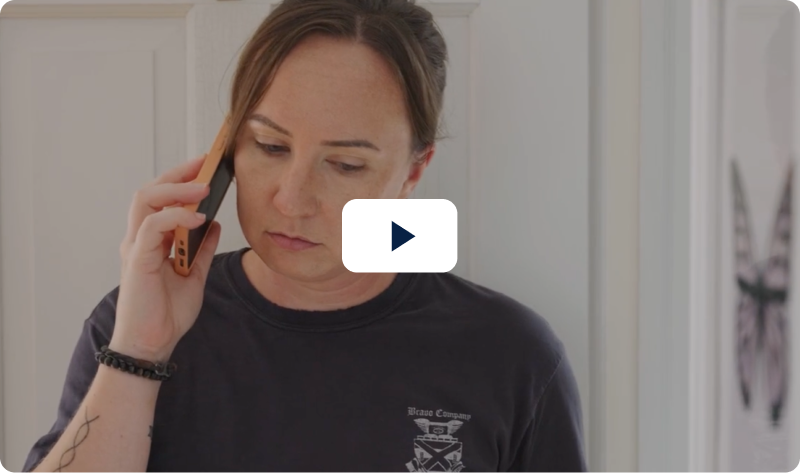
The goal is to help your loved one get through the worst of their feelings in the moment.

  • If they’re giving signals that all they want is distraction, that’s fine: distract.
  • Do they focus on their pain? Talk about it—don’t try to minimize or skirt around it. Listen, accept it, sit with it.
  • You don’t need to solve the problem—and if they’re drunk or high they’re not in a planning mode. Help them through by talking until they start to calm down.
  • When your Veteran shows strong emotions, rants or just talks about their feelings, it can be surprisingly effective. It may not solve the problem, but can add some peace that helps clear a path for next steps.
  • If they say they are no longer suicidal when they sober up, it may not mean the problem is over.

  • Find a quiet time and place—when your Veteran is sober and calmer—to talk over the situation, especially if this has been a pattern.

  • Tell them you’re glad they shared their suicidal feelings. Let them know you care, want to help, and that most people who become suicidal recover.
  • Without arguing, guilt-tripping, or lecturing, acknowledge that they're feeling a lot of pain.
  • Ask what they think could help lessen the pain. It might be therapy. If they’ve tried therapy and it hasn’t helped, they might give another therapist or medication a try. Often it’s a matter of finding the right match.
  • A support group or a 12-step program is often a great option.
  • You don’t need to be expert in this stuff. Call 988 to learn about options on your own or together.
  • Other options could be helpful, like joining regular, positive social activities. Examples are a running club, book group, volunteer carpentry for a shelter, or getting a pet. Ask your Veteran which social situations might be bad for them.
  • Don’t forget to make a plan for guns and medications at home.
  • Plan now for what to do if things get worse and talking doesn’t help. See the "Is it an emergency?" tab below.

  • Check in with your Veteran from time to time. That’s a concrete way to show you care.

  • Some check-ins can be about something simple, like sports scores, a good Netflix series. Sometimes, you should directly address the pain. “Are you still thinking about killing yourself?” If yes, ask if it’s getting worse, how often it happens, how long it lasts, or if their thoughts sometimes control them.
  • Thoughts of suicide are a sign that something needs to change.
  • If things seem to be getting worse. urge them to try treatment, or call/text 988. They can also consider changing providers or their treatment approach if they are already in care.
  • Remember to check in with yourself throughout this process. If it feels too much, reach out to others in your own social network for support, or call/text 988.
  • For additional support for both you and your loved one or to connect with a peer, you can call 844-255-2929 or 844-CLL-2WAV at any time.

  • Examples of emergencies needing immediate outside help include the following:
  • The person has the means to hurt themselves in their hand or at their side. They say they are going through with it now.
  • They are agitated, not making sense, and doing very dangerous things that put them at risk (like climbing onto a rooftop ledge while drunk).
  • They are being violent toward you or another person, and there is a real risk someone will be injured.
  • They are hearing voices telling them to end their life and they are unable to resist those voices.
  • They tell you they are afraid they will hurt themselves and they want to go right away to a hospital or some other place where people will know how to protect them.

  • Both have advantages and disadvantages.

    988 has the advantage of being staffed by people trained in behavioral health emergencies. Depending on where the Veteran is, mobile crisis units can be dispatched to the scene or meet your loved one at a clinic. Getting familiar with the local 988 resources before a crisis hits can be useful.

    911 has the speediest response time. It typically results in armed officers arriving. While many officers or specially-trained responders are skilled in these types of situations, some are not. When police response operates at its best, the person in crisis is protected and connected to useful care. At its worst a bad situation can escalate and end with the police shooting the person in crisis—a tragedy for all involved.

    Arrival of police can have different effects on different people. When facing an emergency, if your Veteran is able to communicate, ask them how they feel about having police arrive and let their answer in part inform your next step.

    Consider calling 988, not 911:
  • If your Veteran typically gets anxious around police.
  • When there is no immediate threat of serious injury or violence.
  • When your loved one needs assistance and 988 is able to quickly dispatch a mental health provider to the scene (some parts of the country have this capacity, many do not).
  • Or, if your loved one has said they’ll try to get police to kill them (this is unusual but not unheard of).

  • Consider 911:
  • You need someone to arrive very quickly to protect your Veteran.
  • Or, there is a threat of serious injury to others.

  • Tell the 911 dispatcher and responders whether there are guns at home. If there are guns at home, and you are able, use secure storage before the police arrive so they will not face a person with a gun. That too easily leads to tragedy.

    Be specific with the 911 dispatcher and responders about weapons and level of threat.

    For example:
  • “There are no guns at home. He is holding a knife and talking about cutting his neck, but he isn’t threatening anyone and has never been violent. Please let all officers know he is not dangerous.”
  • “She’s talking about throwing herself out the window and is up on the third floor with the door locked. She has no weapons, and there are no guns at the house.”
  • “He has a gun and there are two kids in the room with him, and he won’t let them leave. He’s threatening to kill them and himself.”

  • Tell the 911 dispatcher and responders about any behaviors or conditions they should be aware of:
  • “He might reach into his pockets a lot or wave his arms around—he’s on the autism spectrum and those are self-soothing behaviors. He doesn’t have a gun.”
  • “He’s very hard of hearing.”
  • “She gets very agitated if people shout orders at her; she does better with quiet, simple directions.”

  • Scroll to Top